From $42.8K to $92.7K/month
in under 60 days on paid
How Ads Mastery took Makiaj, a beauty lighting brand running almost entirely on organic Instagram traffic, and built a paid acquisition channel that more than doubled monthly revenue in under 60 days at a 3.5X return.
Apply NowMakiaj makes professional lighting for beauty. The Makiaj Beauty Light puts studio-grade illumination into a device that fits in one hand, running 3,000 lumens against competitors closer to 250, with adjustable brightness and color temperature from 3300K to 5600K. Founder Pooja Mehta spent two decades as a celebrity makeup artist and trained in Paris before building the product line, which now spans the original Beauty Light, the Mini, mounts, tripods, and bundles from roughly $99 to $400. The light has been featured in Harper's Bazaar and used backstage at the Met Gala.
The brand had genuine demand and almost nothing carrying it. Traffic arrived from Instagram and organic branded search, revenue sat near $42,800 a month, and there was no paid acquisition running at any real volume. The storefront converted, but it was built around products that kept selling out, and the catalog was about to move through a phase-out, a restock, and a new version launch inside a single quarter. Makiaj joined Ads Mastery in June 2026.
Real demand, no paid engine, constant inventory churn
Makiaj had a product people wanted and press most beauty brands never get. What it did not have was a paid channel, or an operating rhythm that could keep one productive while stock moved underneath it.
No Paid Acquisition
Revenue came from Instagram and organic branded search. No paid channel was carrying meaningful volume, which capped growth at whatever organic reach happened to deliver.
Inventory Driving Strategy
The Mini sold out repeatedly. Campaigns had to be cut, rebuilt, and repointed at whatever was genuinely in stock, sometimes inside a single week.
Sold-Out Products Up Front
The storefront was leading with pre-order and out-of-stock items, sending buyers who were ready to purchase straight into a dead end and back out again.
High COGS, Narrow Room
Cost of goods on a hardware device leaves less margin than most beauty. Campaigns had to clear 3.5X to 4.5X to be truly profitable, not the 2X that works in other categories.
No Creator Pipeline
A fundamentally visual product sold to content creators, with no system for getting it into creators' hands or getting their content back into the ad account.
A Closed TikTok Channel
Only four of seven products were showing on TikTok, with inventory counts reverting to zero, so an entire sales channel sat effectively closed.
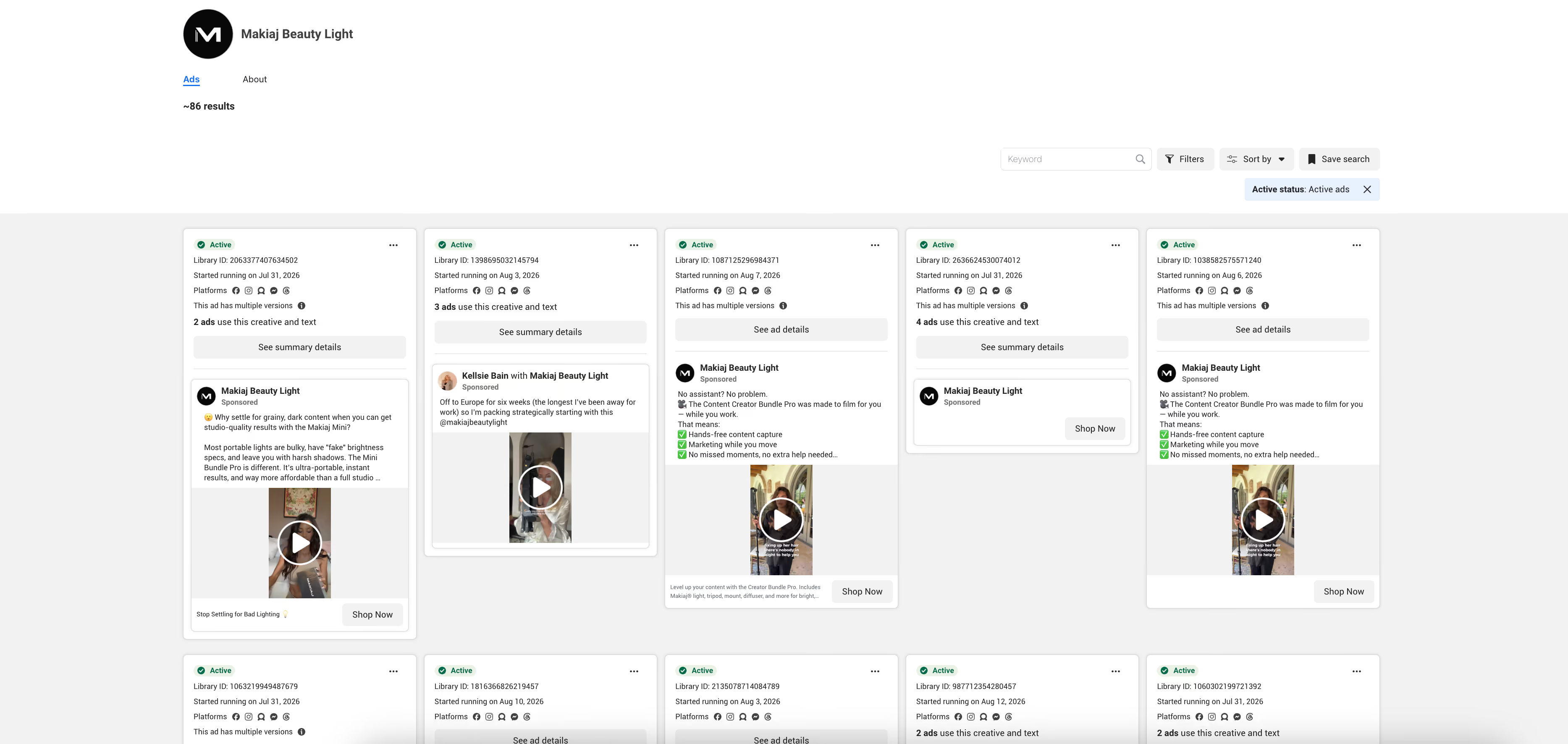
Build the paid channel, keep it pointed at what's in stock
The work split in two: standing up a Meta account that could carry real volume profitably, and building the operating discipline to keep it productive while inventory moved underneath it.
Campaigns were structured across interest testing, broad CBO, retargeting, and a separate creative testing campaign held deliberately outside the ROAS-judged budget, so new concepts could never drag the scaling campaigns down. Budgets moved up per interest group as returns held, and retargeting was scaled toward $600 to $700 a day. In the first seven days after launch, total sales rose 84% and orders rose 65%, at a 4X return.
Because cost of goods on a hardware device runs high for beauty, the kill threshold was set at 3.5X rather than the 2X that clears in most of the category, with 4.0X to 4.5X as the real profitability target. Measurement moved to marketing efficiency ratio rather than platform-reported ROAS alone, so influencer fees and content production counted against revenue instead of sitting outside the math. Creative testing was paced at 10% to 15% of total spend so discovery kept running without eating into the winners.
When the Mini sold out, budget came off it the same week and was rebuilt against the Creator Bundle Pro rather than left running against something nobody could buy. Sold-out and pre-order items were reordered or hidden on the storefront so in-stock products led, and the homepage hero was rebuilt around whatever was actually shipping. Campaigns were designed to cycle between products as stock moved, instead of committing to a single hero SKU that would inevitably run out.
A creator program was opened and drew more than 300 sample requests in five days. Rather than accepting broadly, applicants were filtered on 30-day GMV first, then reviewed by hand for content quality and aesthetic fit, because a lighting product is judged entirely on how good the resulting video looks. Top performers were paid a flat fee per video instead of commission, and every approved creator received reference videos and a brief so output matched the brand. Existing customer content was pulled in through the Partnership Ads Hub, with 70 recent buyers providing a fresh supply.
Rather than running promotions that would erode an already tight margin, urgency came from real stock history: a product that had genuinely sold out three times in a year. Storefront work concentrated on the middle of the page, with a what's in the box section, features and benefits carried by simple visuals, a comparison chart, and upsell carousels restored on both cart and product pages. The V2 launch was structured as a variant on the existing product page rather than a separate listing, with a side-by-side comparison so buyers could see exactly what the extra $30 bought them.
Under 60 days to double
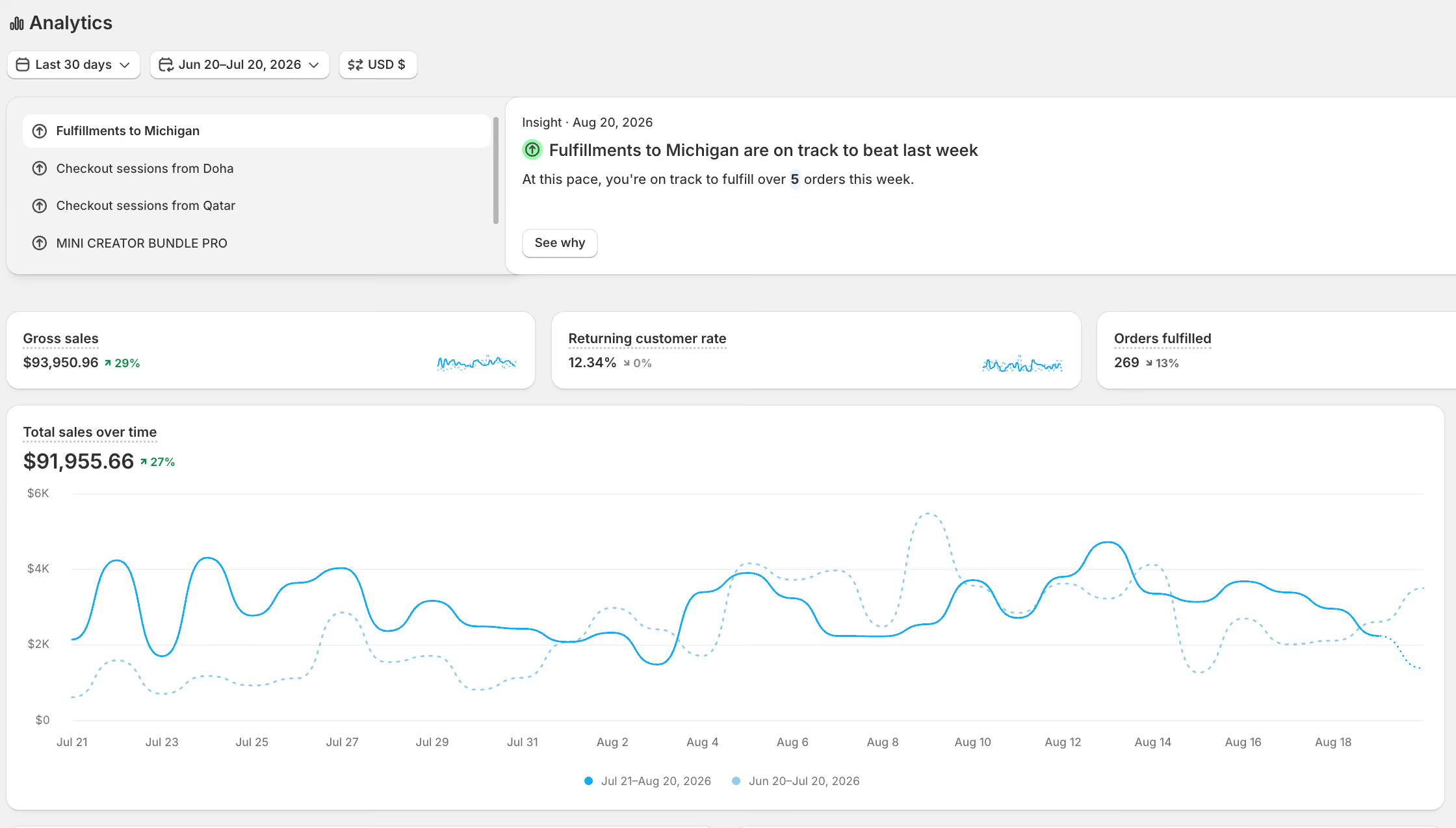
2.2X in under 60 days.
Makiaj entered the mentorship at $42,780 a month, carried almost entirely by organic Instagram traffic and branded search. Within two months revenue had more than doubled to $92,676, with a Meta channel running profitably at 3.5X and a creator pipeline feeding it.


