From $540K to $968K/month
in under 90 days
How Ads Mastery helped MakerFlo, a laser engraving and sublimation blanks supplier already doing over half a million a month, rebuild Meta around new customer acquisition and add $428K in monthly revenue in under 90 days while lifting ROAS from 3X to 4X.
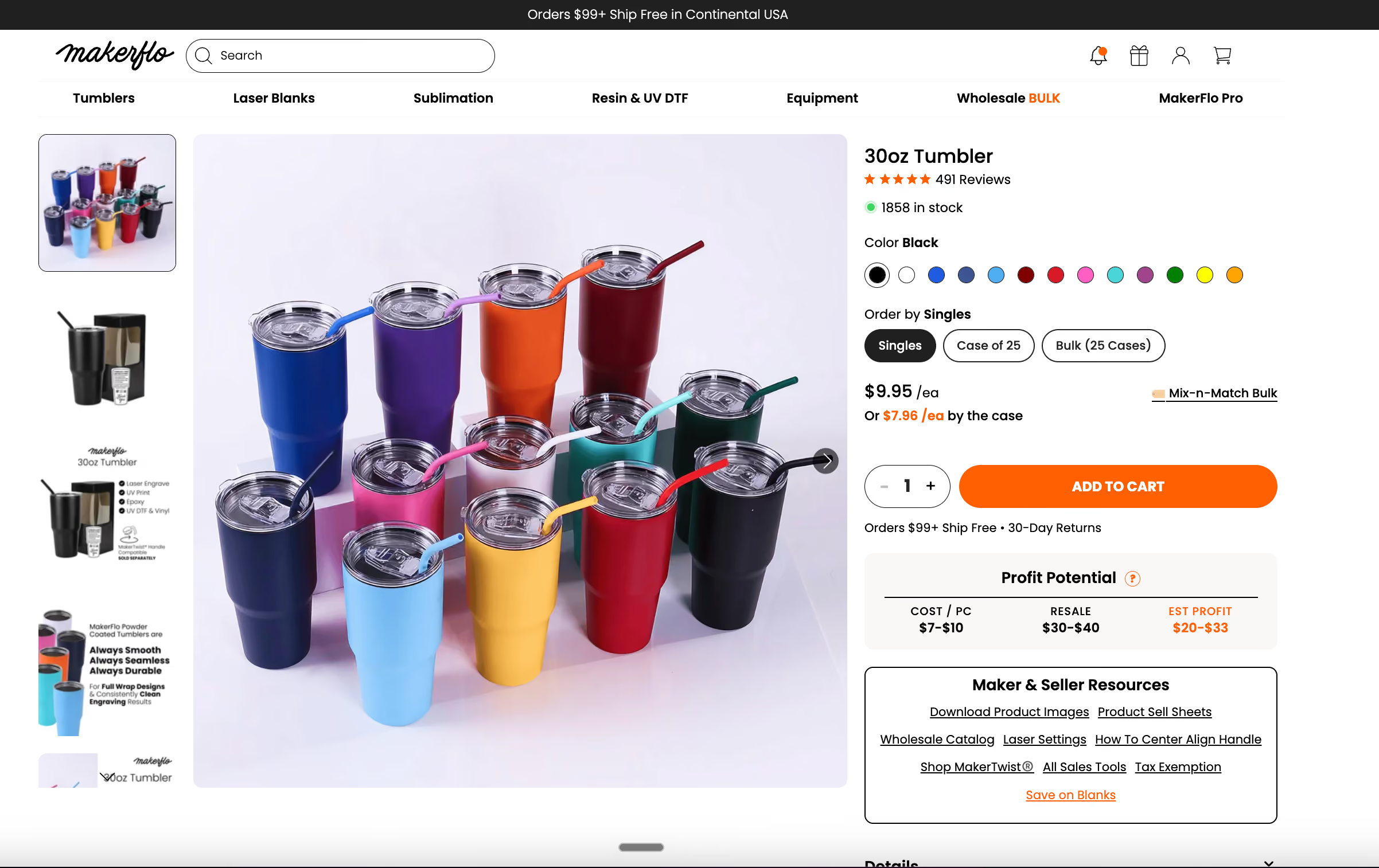
Apply NowMakerFlo supplies the blanks, tumblers, and equipment that personalization businesses are built on: laser engraving blanks in wood, marble, glass, and TruFlat plywood, sublimation and UV print supplies, and bulk tumblers sold by the case. Laser engraving drives the majority of revenue, backed by 15 years of hands-on experience, and the founders front the brand themselves through a monthly podcast, weekly live streams, and a Facebook community of more than 40,000 crafters. Their buyers range from makers running a business out of the garage to established shops doing $2M a year.
The business was already doing roughly $540,000 a month, with about $50,000 a month in ad spend split between Google PMAX and Meta under an outside agency. The ads were built around aesthetics rather than a funnel, the creative library was small and dated, and the same past customers kept seeing the same catalog ads. The founders put it plainly: there was no clear plan to scale, and they wanted one built toward $10M to $12M a year. MakerFlo joined Ads Mastery in July 2026.
A half-million-dollar brand with no plan to grow past it
MakerFlo had the community, the founders on camera, and a library of customer content most suppliers in its category never build. What it did not have was a paid account structured to turn any of that into new customers.
Ads Without a Funnel
An outside agency ran paid on looks rather than strategy. Spend leaned heavily on Google, and Meta had no real prospecting structure sitting on top of it.
A Thin, Dated Creative Library
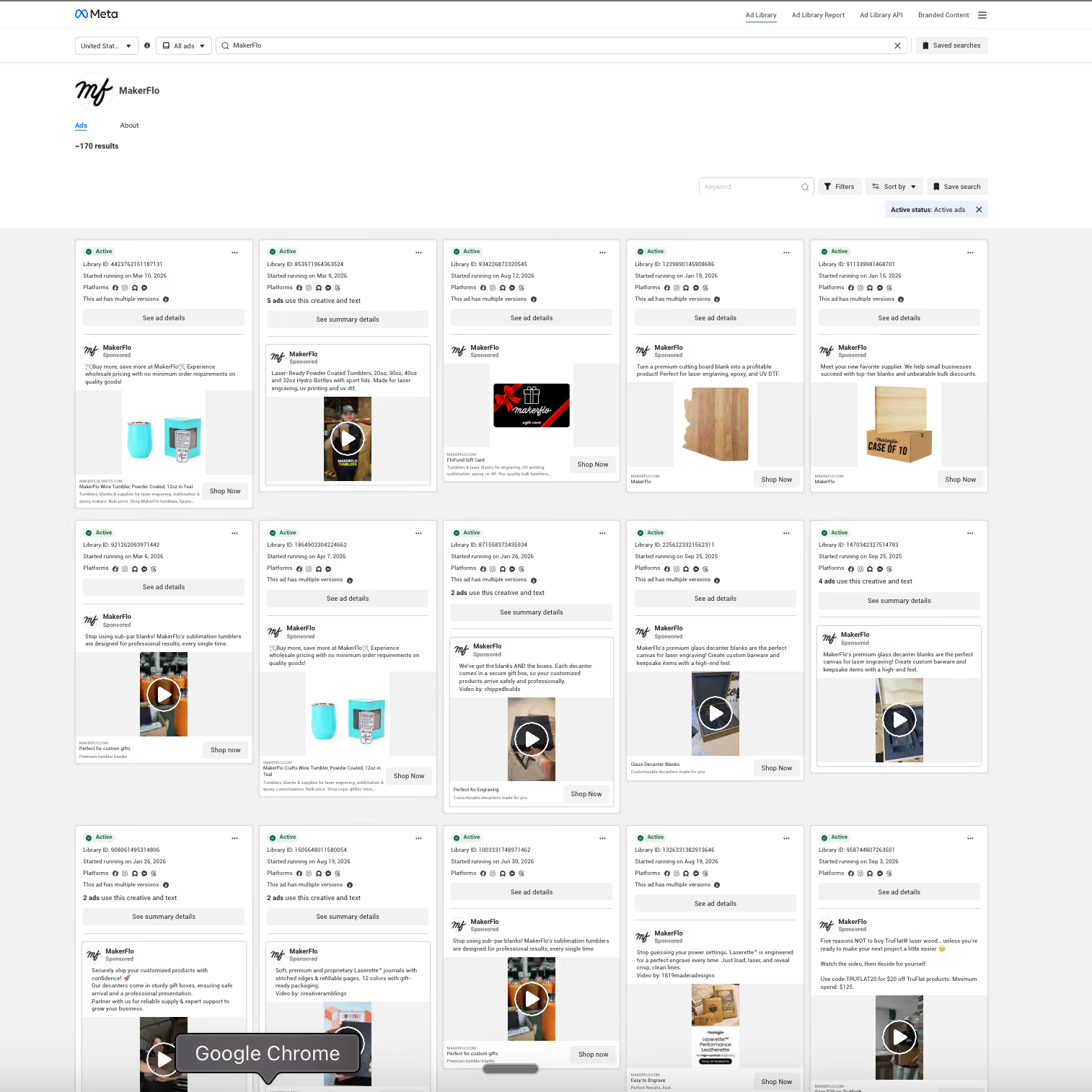
Around 46 live ads, most of them old, while the biggest brand in the space was running more than 1,000. There was nothing new for the algorithm to find buyers with.
The Same Buyers, Over and Over
Ad frequency sat around 7. Catalog campaigns kept serving existing customers while new customer reach stayed low, so spend went up without the customer base growing with it.
Content Sitting on the Shelf
About 75 loyal customers were making content for free, plus podcast clips and weekly lives. None of it had a system for getting approved and into the ad account.
Tracking Working Against Spend
A custom new customer purchase event was pushing CPMs up and weakening the signal Meta optimizes on, making every prospecting dollar more expensive than it needed to be.
Inventory Capping the Ceiling
Low stock and delayed containers meant spend could not simply be pushed. Every budget move had to be reallocated toward what was actually on the shelf.
Rebuild Meta around new customers, then feed it content
The work ran on two tracks: restructuring the Meta account so spend went toward people who had never bought, and building a creative and creator pipeline fast enough to keep that structure fed.
Prospecting was rebuilt as multiple ad sets split by persona, including small business owners, entrepreneurs, DIY, and arts and crafts, each carrying 7 to 10 unique ads so no single creative could lock up the budget. Ads pointed at the collection that matched what was on screen. The custom new customer event was dropped in favor of the standard purchase event with customer list exclusions, the purchase exclusion window was extended from 180 to 720 days, and catalog activity was separated so it stopped absorbing prospecting budget.
New creative went into dedicated ABO testing campaigns at $30 to $40 a day, kept separate from the scaling campaigns. Anything that hit 3 to 6 sales at a healthy cost per purchase was copied into scaling, and budgets moved up in 20% to 30% steps so learning never reset. The account went from a stale library to 30 new creatives launched in about a week, covering statics for knives, valet trays, tumblers, and the marble line alongside product showcase videos.
In an industry still selling out of print catalogs, the founders' faces were the advantage. Talking-head founder videos, warehouse footage, behind-the-scenes, and how-to content quickly became the strongest performing formats in the account, with one warehouse educational creative running at roughly 7X ROAS over 14 days. Under-delivered concepts were copied into fresh ad sets to force spend rather than being written off.
Existing customer content was pulled in through the Partnership Ads Hub, opening a path from roughly 500 usable pieces of content toward 3,000. A formal creator program launched with briefs built around three formats, Mythbuster, Secret Reveal Authority, and a Local B2B Outreach Playbook, each with reference videos so creators had direction without reading a script. Affiliate links went straight into the UGC ads so creators were paid on what their content actually sold.
With new customer volume climbing, retargeting was scaled back up to rebuild repeat orders, refreshed weekly with the best performing creative. TikTok Shop was stood up through Seller Center with GMV Max campaigns, an 8% to 10% Shop Ads commission, and a starting target ROI of 1.8 to 2. A Black Friday and Cyber Monday roadmap followed, mapping the early offer, the main offer, and the discount structure ahead of Q4.
Knocking on $1M a month
+79% in under 90 days.
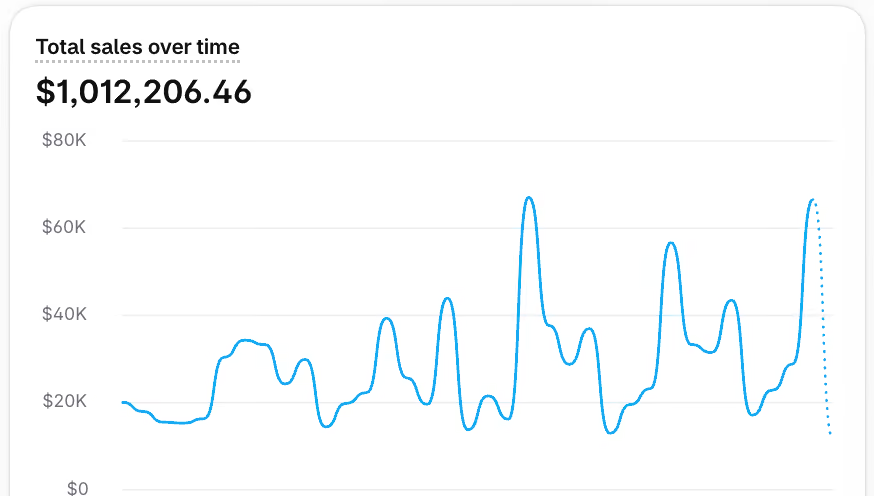
MakerFlo entered the mentorship at $540,312 a month with an agency-run account, a stale creative library, and ads hitting the same customers on repeat. Inside 90 days revenue reached $967,888 a month, on a Meta account built around new customer acquisition and a creative pipeline fed by the founders, the warehouse, and the community.


