From $675 to $105K/month
on TikTok Shop in under 90 days
How Ads Mastery rebuilt Faith & Flame's TikTok Shop from a dormant storefront into a six-figure monthly channel in under 90 days, using creator affiliate volume, platform-funded offers, and GMV Max rather than traditional media buying.
Apply NowFaith & Flame is a Christian publisher and retailer serving families and churches with Bibles, Bible studies, devotionals, children's books, and church supplies. The company publishes ten to twelve new titles a month across imprints including Harrison House and Destiny Image, and operates the largest YouTube channel of any book publisher in the world. Titles run from $13.99 to around $60, with free shipping over $30.
Reach was never the problem. YouTube alone brought in $7,500 a month in brand deals on top of ad revenue, and drove under $500 a month in direct sales. Meta campaigns built around individual titles had repeatedly lost money. And TikTok Shop, the channel with the most obvious fit for a catalog of impulse-priced books, was doing $675 a month after the person running it left. Faith & Flame joined Ads Mastery in April 2026 with rebuilding TikTok as the day-one priority.
An enormous audience that was not buying
Faith & Flame had distribution most publishers would envy and a catalog priced perfectly for social commerce. What it did not have was a channel that turned any of that attention into orders.
$675 a Month on TikTok Shop
The storefront existed but sat effectively dormant after the previous manager left. Ads were running through Ads Manager, performing badly, and getting shut down repeatedly.
Reach Without Revenue
The largest YouTube channel in book publishing produced $7,500 a month in brand deals and under $500 a month in direct sales. Audience size was never the constraint.
Meta Ads That Lost Money
Earlier campaigns built narrowly around single titles were unprofitable. The approach was described internally as shotgun spending with no reliable path back to a return.
No Creator Pipeline
TikTok Shop runs on creator video volume. There was no outreach system, no affiliate recruiting, and no commission structure capable of attracting one.
Running the Wrong Tooling
Campaigns lived in Ads Manager instead of Seller Center, missing GMV Max, product cards, and the automated recovery flows that drive a large share of TikTok Shop revenue.
Thin Margin on Low-Ticket
Books at $13 to $25 carrying author royalties leave very little room. Platform fees and affiliate commissions could erase the margin entirely without a deliberate structure.
.avif)
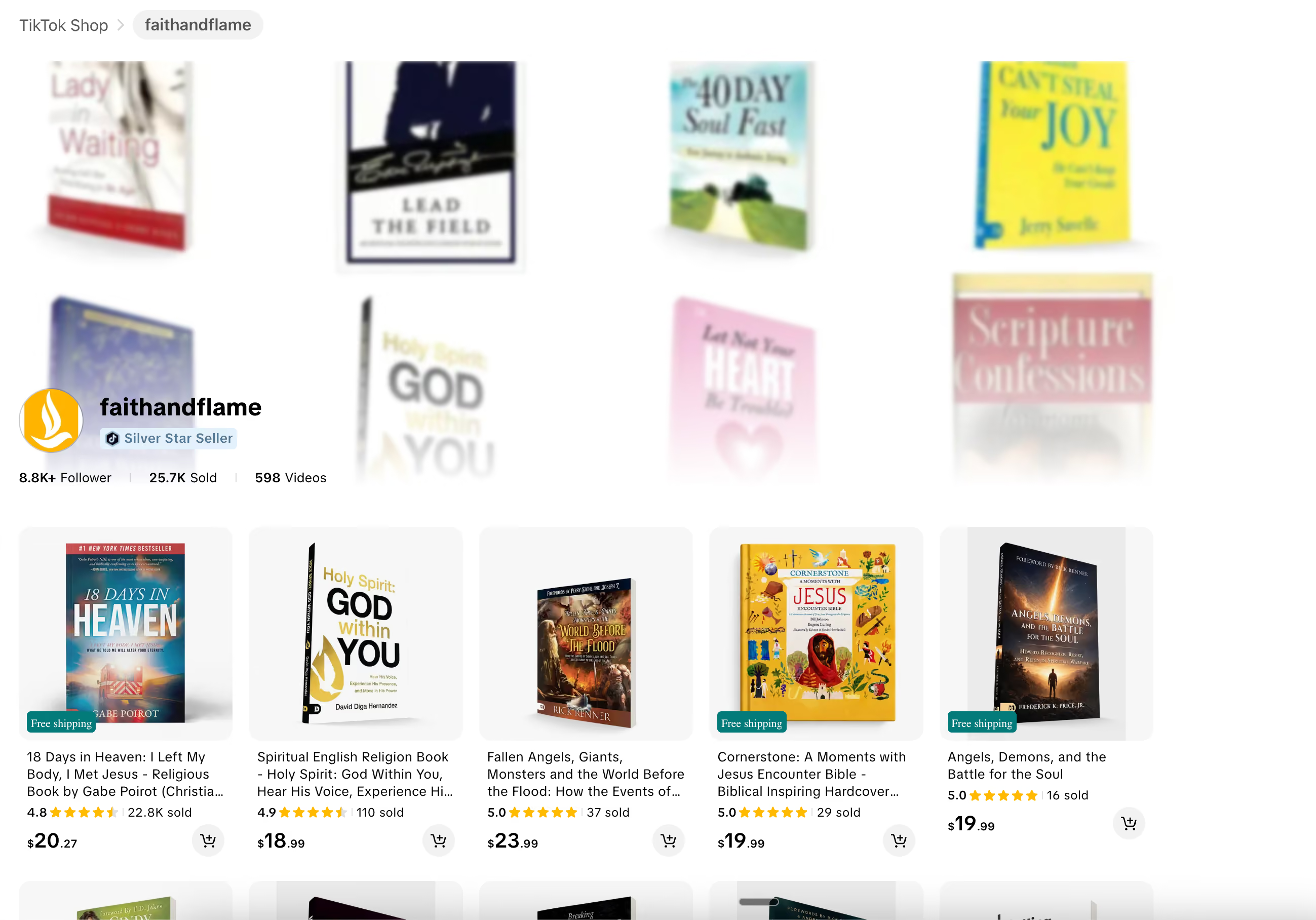
Creator volume, platform-funded offers, and GMV Max
TikTok Shop does not reward traditional media buying. Ads Mastery rebuilt the channel around what the platform actually pays out for: creator video volume, exclusive offers, and campaigns run natively through Seller Center.
Campaign management moved into Seller Center and onto GMV Max, which automates product tagging and creative selection. Product card campaigns became the backbone, driving roughly 30% to 40% of sales as automated retargeting. TikTok's native cart and checkout recovery flows were switched on with coupons attached, recovering around 10% of otherwise lost orders at no additional media cost. Daily budgets stepped from $30 to $90 to $300 as return held, eventually reaching $1,000 a day on the strongest campaigns.
The affiliate program was rebuilt as a volume operation. Creators were filtered on hard thresholds: at least an 80% post rate, $1,000 in GMV over 30 days, and 250 to 300 average video views, then narrowed by niche to Christian and book creators, cutting a pool of 54,000 down to roughly 14,000 genuinely qualified. Outreach ran at up to 7,000 new creators a week against a 5,000 message daily cap, with fresh lists each cycle to avoid fatigue. Commissions were set at 50% on organic sales and reduced to 10% to 15% on ad-supported sales to protect margin, with custom rates reserved for proven top performers.
TikTok's funded campaign windows became the profit engine. During these events the platform covers the discount, so a $23 book can sell at a deep markdown without touching margin, while reach lifts 100% to 250% for the same ad cost. Campaigns were deliberately timed to ramp into each window. Between them, TikTok-exclusive offers, follower coupons, buy-more-save-more tiers, and monthly three-day flash sales kept the storefront prioritized by an algorithm that rewards products unavailable at the same price anywhere else.
The correlation held across every campaign: ad sets carrying 10 to 15 creatives consistently outperformed those with 3 to 5. The lead title accumulated more than 250 creator videos on its own. Production polish mattered far less than message and audience fit, with visibly low-budget creator videos generating thousands in sales. Winning TikTok videos were then licensed for Meta through usage rights requests, with creators offered an extra 10% commission, so proven content carried across platforms with no new production.
Live shopping was built out as its own channel, with individual streams producing $7,000 to $8,000 and author-led sessions visibly spiking storefront sales. TikTok's native email follow-up sequences were configured for bestsellers, new launches, and abandoned checkouts, outperforming conventional email open rates. And because TikTok demand consistently spills into Amazon at a 40% to 60% overlap, the campaign was measured on its halo effect too, with the lead title holding bestseller status throughout the push.
Under 90 days from dormant to six figures
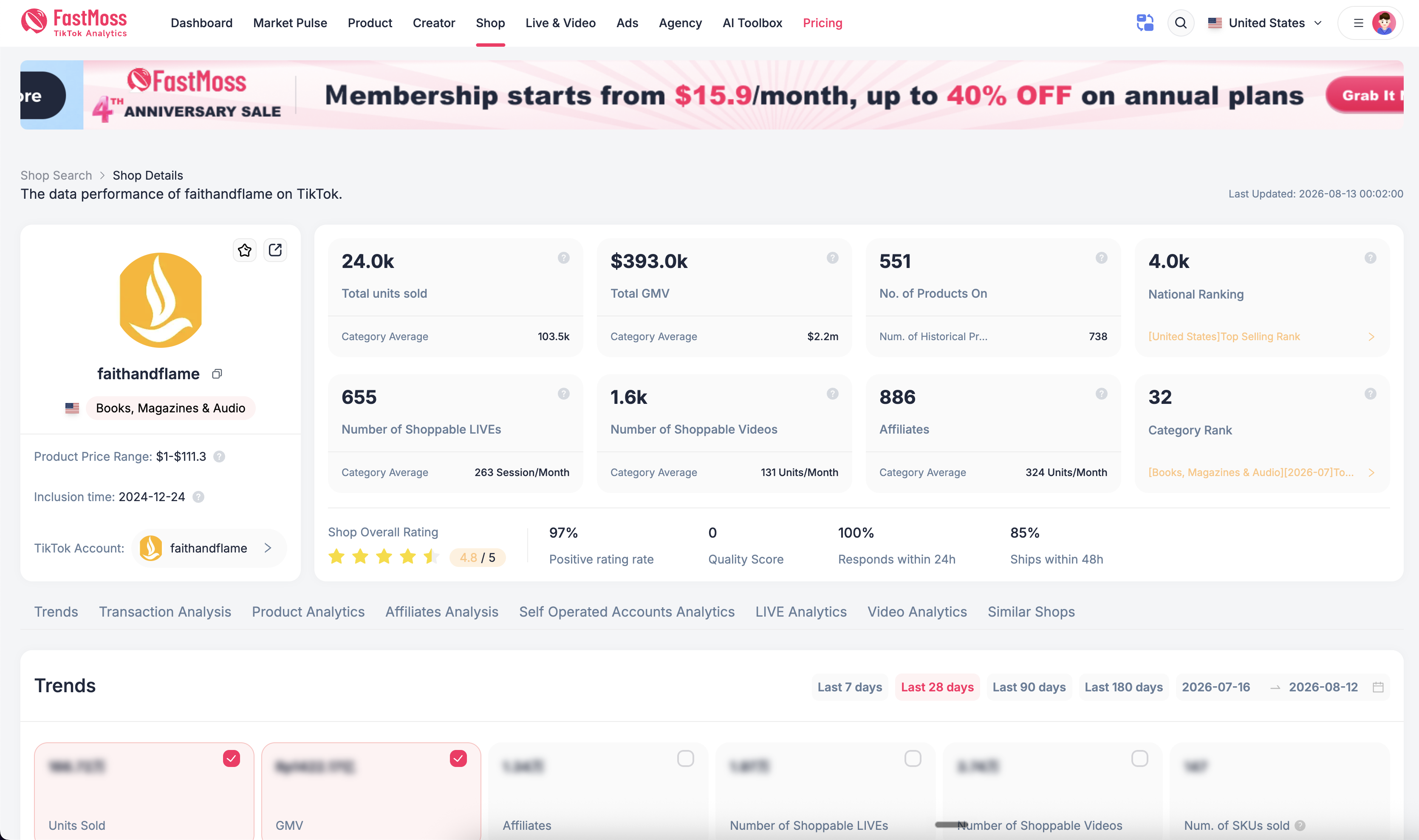
155X growth. Under 90 days.
Faith & Flame started April 2026 with a TikTok Shop doing $675 a month. Within three months the channel was producing over $105,000 a month at a 4X return, built on creator affiliates and platform-funded offers rather than conventional ad spend.


