From $11.7K to $320K/month
in a brand-new market
How Ads Mastery helped Anothersole, an Asian footwear brand with over 500,000 pairs sold, break into the United States from a standing start. A 27X climb built on founder-led creative volume, a rebuilt conversion funnel, and a separate playbook for every market.
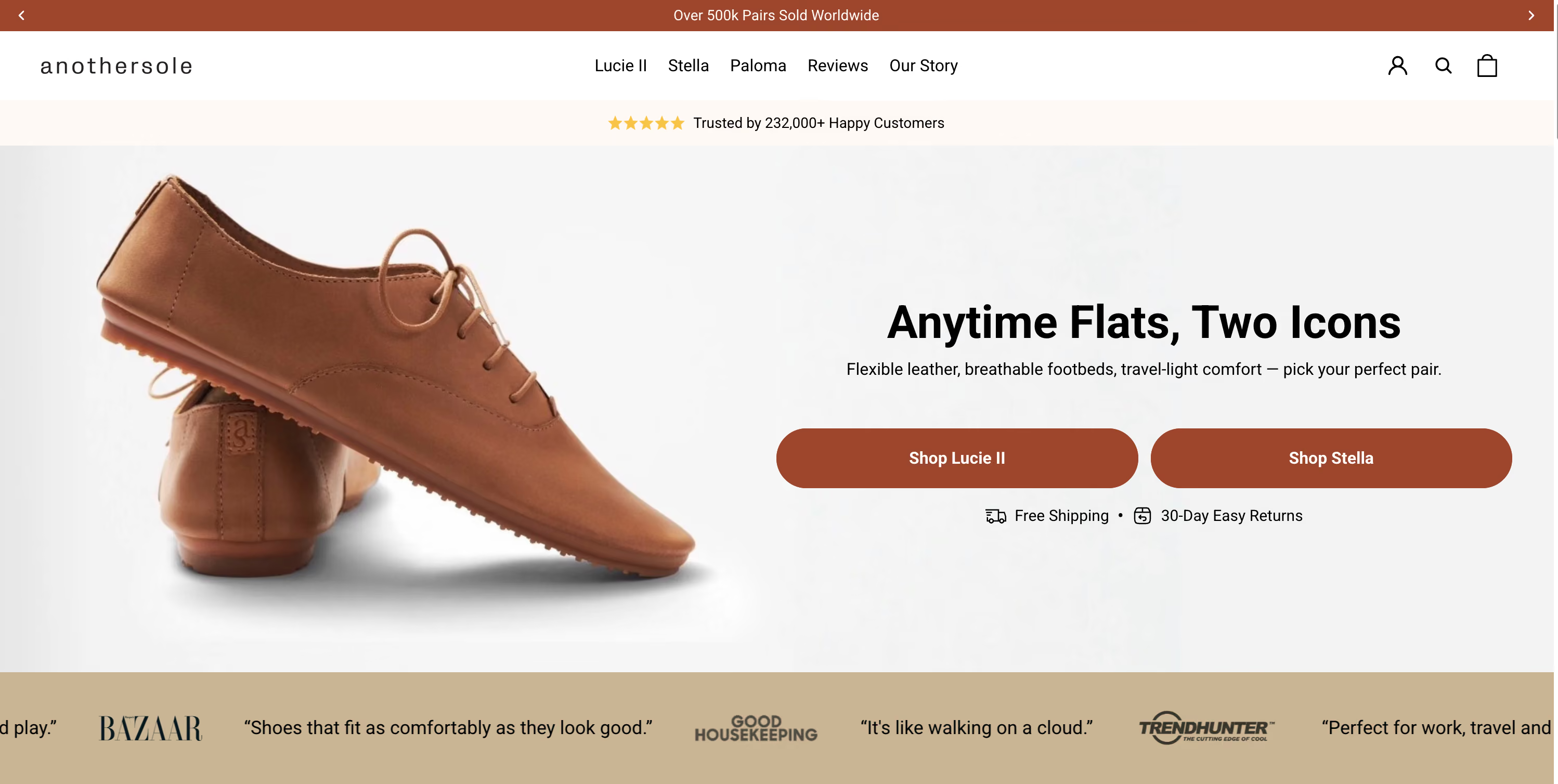
Apply NowAnothersole makes one thing exceptionally well: a leather flat you can wear all day and forget you have on. LWG-certified full-grain leather, plant-based footbeds, and fully flexible soles that pack flat for travel. The Lucie II and Stella have carried the brand past 500,000 pairs sold and 232,000 customers across Singapore, Malaysia, the Philippines, Hong Kong, and Australia, with press in Harper's Bazaar and a Buy 1 Feed 1 program that gives away 10% of annual profit.
The United States was a different story. A decade of brand recognition and retail presence across Asia counted for nothing in a market that had never heard of them. The newly launched US store was converting at 0.26% and doing $11,709 a month. At the same time the mature Singapore business was sliding backwards, with January revenue at half the prior year and MER down from 9.8 to 3.5 despite a 60% increase in ad spend. Benny Chee joined Ads Mastery in January 2026.
Opening a new market while the old one was slipping
Anothersole had the product, the reviews, and the manufacturing. Half a million pairs of proof. What it did not have was an advertising system that could open the US from zero while stabilizing the markets it already owned.
0.26% US Conversion Rate
The new US store converted at a quarter of one percent. Add to cart sat at 2.6% against a 6% to 10% benchmark, and checkout was missing the pay-over-time options American buyers expect at a $165 price point.
No Creative Testing System
A handful of ads running until they burned out. No protected testing budget, no kill rules, and no pipeline of fresh concepts ready to replace winners as they fatigued.
Singapore In Decline
January revenue at half the prior year and MER down from 9.8 to 3.5, despite 60% more ad spend. A steady stream of new drops was cannibalizing the bestsellers that actually acquired customers.
Wrong Account Structure
Everything in CBO, so new creative lost budget to established winners before it could prove itself. Cold campaigns were retargeting existing customers. No exclusions, and no separation between prospecting, scaling, and remarketing.
Friction Across the Site
Broken product links throwing errors, a full-width popup suppressing conversions, and oversized page elements pushing Add to Cart below the fold on mobile.
An Idle Email List
Klaviyo flows sitting in draft, no post-purchase sequences, and campaigns going to the full list with no segmentation. The highest-margin channel in the business was doing almost nothing.
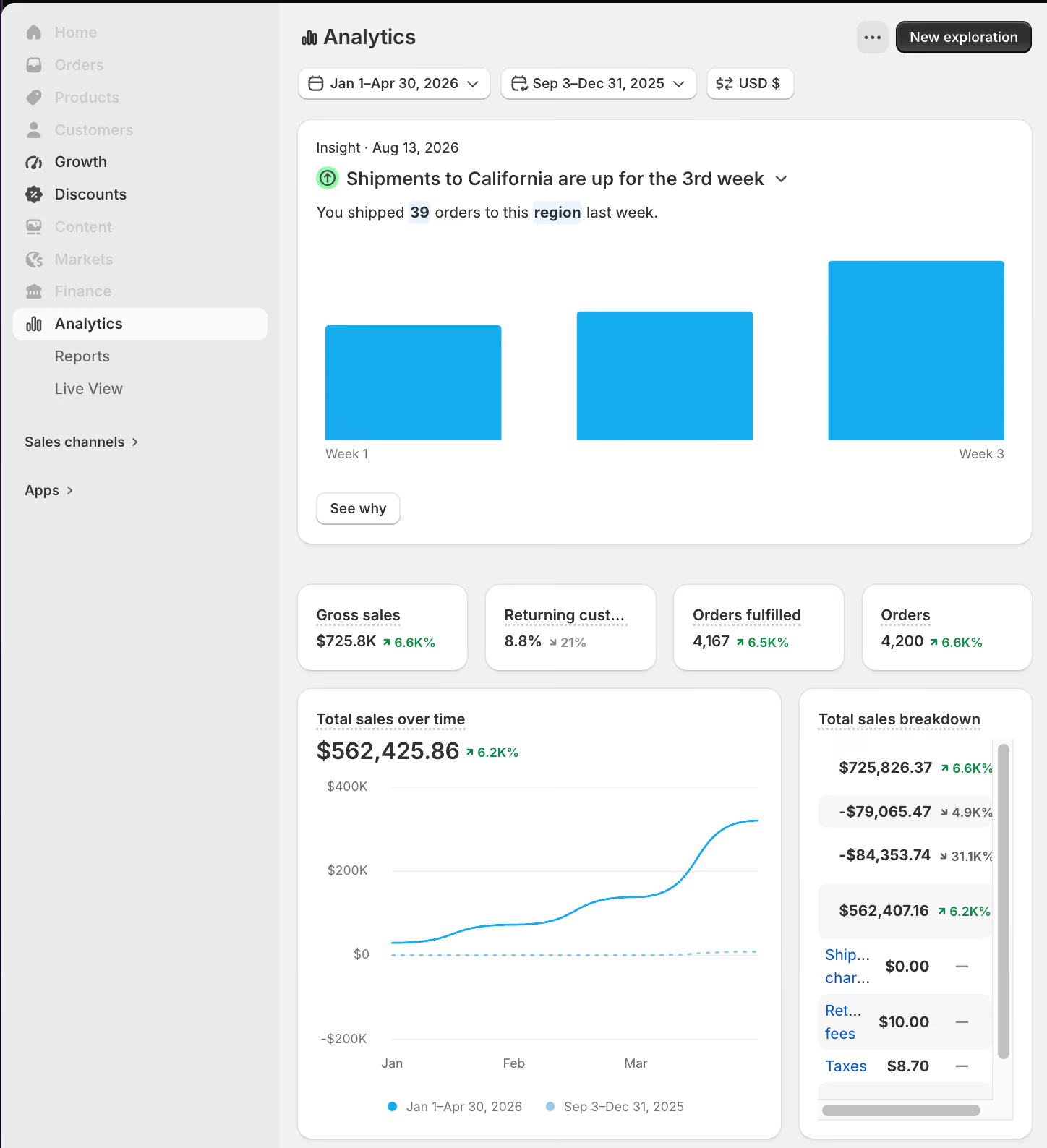
Creative volume, a rebuilt funnel, and a playbook per market
Ads Mastery rebuilt the growth engine from the account structure up, pairing a high-volume creative operation with a conversion funnel that could actually hold the traffic it was buying.
Creative testing moved from CBO to ABO so new concepts got protected budget instead of losing to established winners before they had a chance to prove anything. Every market was split into three campaigns: testing, scaling, and remarketing. Budget was fixed at roughly 60% to 70% on proven evergreen performers, 10% to 20% on testing, and 15% to 30% on retargeting. Cold audience exclusions were added for past purchasers, site visitors, and Klaviyo lists so acquisition spend stopped buying customers Anothersole already had.
Output went to 15 to 30 new concepts every week, benchmarked at 10 to 17 creatives per $1,000 of daily spend. The breakout was Benny himself. A founder-led ad on the comfort angle hit a 7% click-through rate and a 60% hook rate, and became the anchor the entire creative system was built around. From there it was stretched into statics, comparison splits against stiff orthopedic flats, UGC, carousels, and narrated third-person scripts. Kill rules were explicit: anything running past 2X to 3X target CPA without sales came out.
Product pages were rebuilt to answer objections in the order buyers actually ask them, with key product information moved directly beneath Add to Cart, USP overlays on imagery, review counts and photo reviews surfaced early, and shipping expectations set before checkout rather than after it. Shop Pay installments, Afterpay, and Klarna were activated. Sold-out items were flagged, pushed down the page, and fitted with notify-me capture. Conversion rate lifted 55%.
New customer offers were cut down to a straight $15 off the first order, because first-time buyers want something they can use on one pair without doing math. Tiered bundles, $50 off two pairs and $100 off three, were reserved for retargeting and returning buyers where multiples genuinely convert. Klaviyo flows were completed and filtered so recent buyers stopped receiving welcome offers, campaign cadence moved to weekly, and the list was treated as a VIP audience rather than a broadcast channel.
Each market got its own structure instead of a shared one. The US took the majority of budget and creative as the clear growth engine. Singapore shifted 70% of spend back onto evergreen bestsellers instead of new drops and cut CAC by 64%. Malaysia was broken out as a core international market. The Philippines was scaled back on volatility. Price-forward, low-language creative was built for markets where English voiceover was a barrier. Throughout, ad spend was paced against real inventory so campaigns never scaled into a stockout.
A US store built from a standing start
27X growth. A new market opened.
Anothersole entered 2026 with a US store doing $11,709 a month and a mature market in decline. Within six months the US had become the growth engine of the business at $320,753 a month, with conversion rate up 6.5X and ROAS improved even as spend multiplied.


